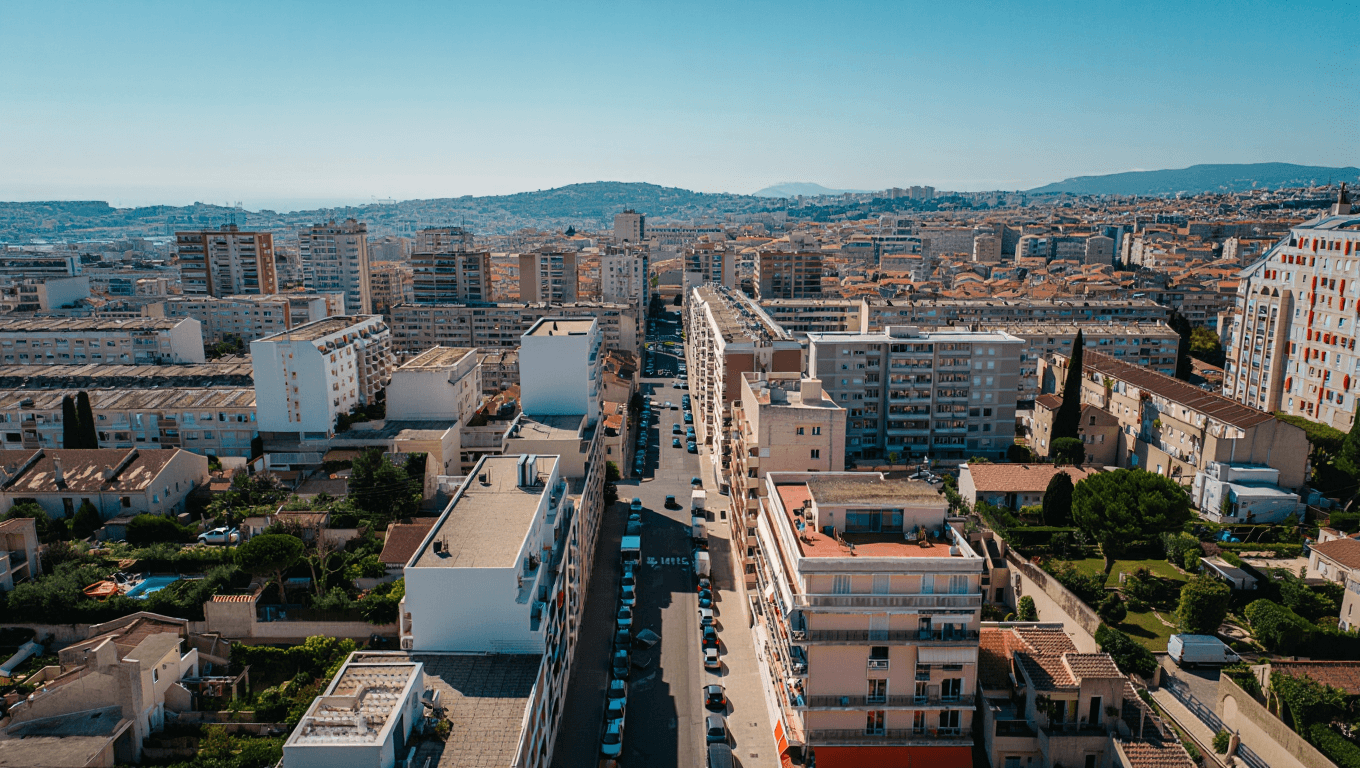
Saint-Tronc is one of the working-class neighborhoods of Marseille’s 10th arrondissement. Located in the eastern part of the district, between La Capelette and Pont-de-Vivaux, it features a mixed residential fabric — large condominium apartments, small townhouses, and a few detached homes — in an area that suffers from a more fragile image than its immediate neighbors. Nevertheless, the market is active, rental demand is strong, and real opportunities exist for sellers who know how to position their property correctly.
LLINARES Immobilier has been active in the 10th arrondissement since opening its La Valentine office (43 rue de l’Audience, 13011). Founded in 2017, our Marseille real estate agency has in-depth knowledge of the dynamics of each neighborhood in eastern Marseille, including Saint-Tronc.
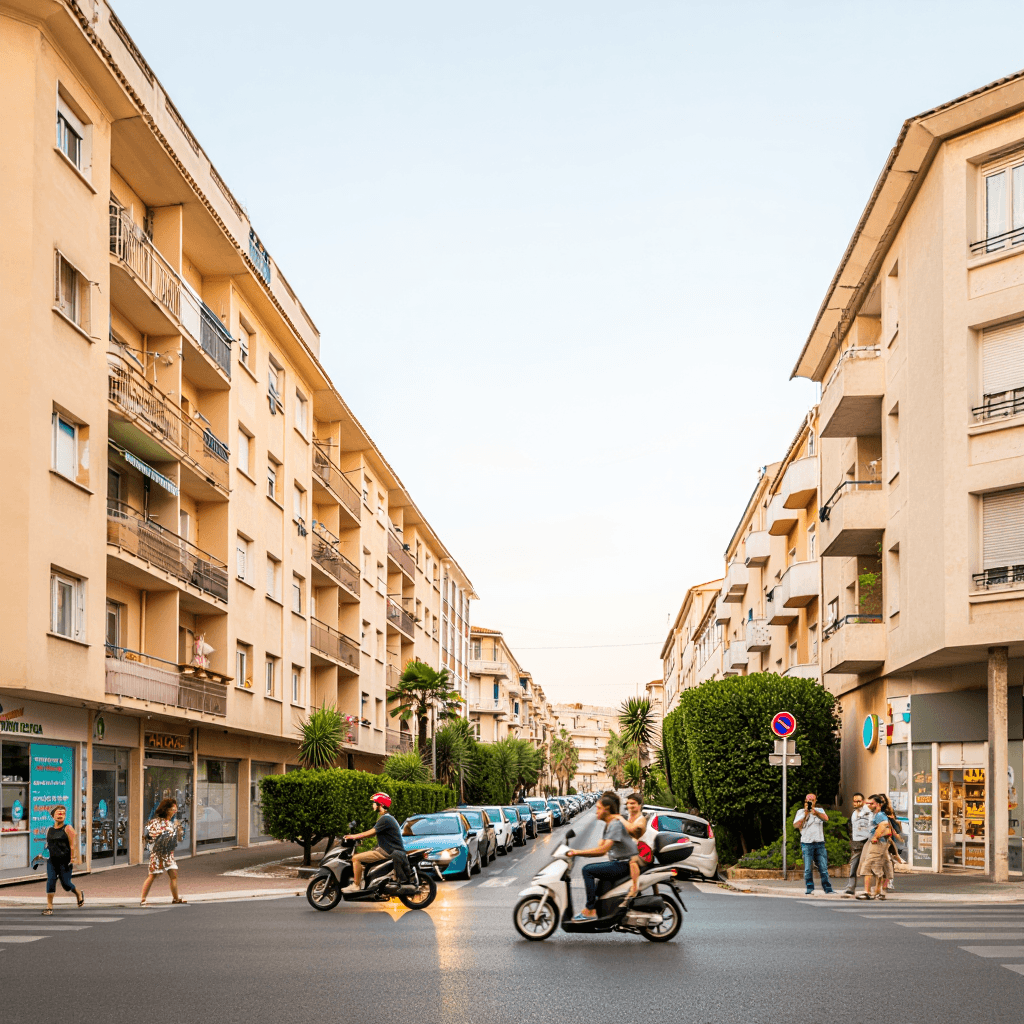

Saint-Tronc shows one of the lowest average prices per square meter in eastern Marseille: €2,951 per m² on average for apartments (MeilleursAgents, April 2026), with a range from €1,989 to €4,245 depending on the building and its location. This affordable positioning creates strong rental demand — particularly from lower-income tenants — and relatively high property turnover.
One notable point: houses in this area average €4,769 per m² — 61.6% higher than apartments. This premium confirms the rarity and attractiveness of properties with outdoor space across eastern Marseille, even in more modest neighborhoods.
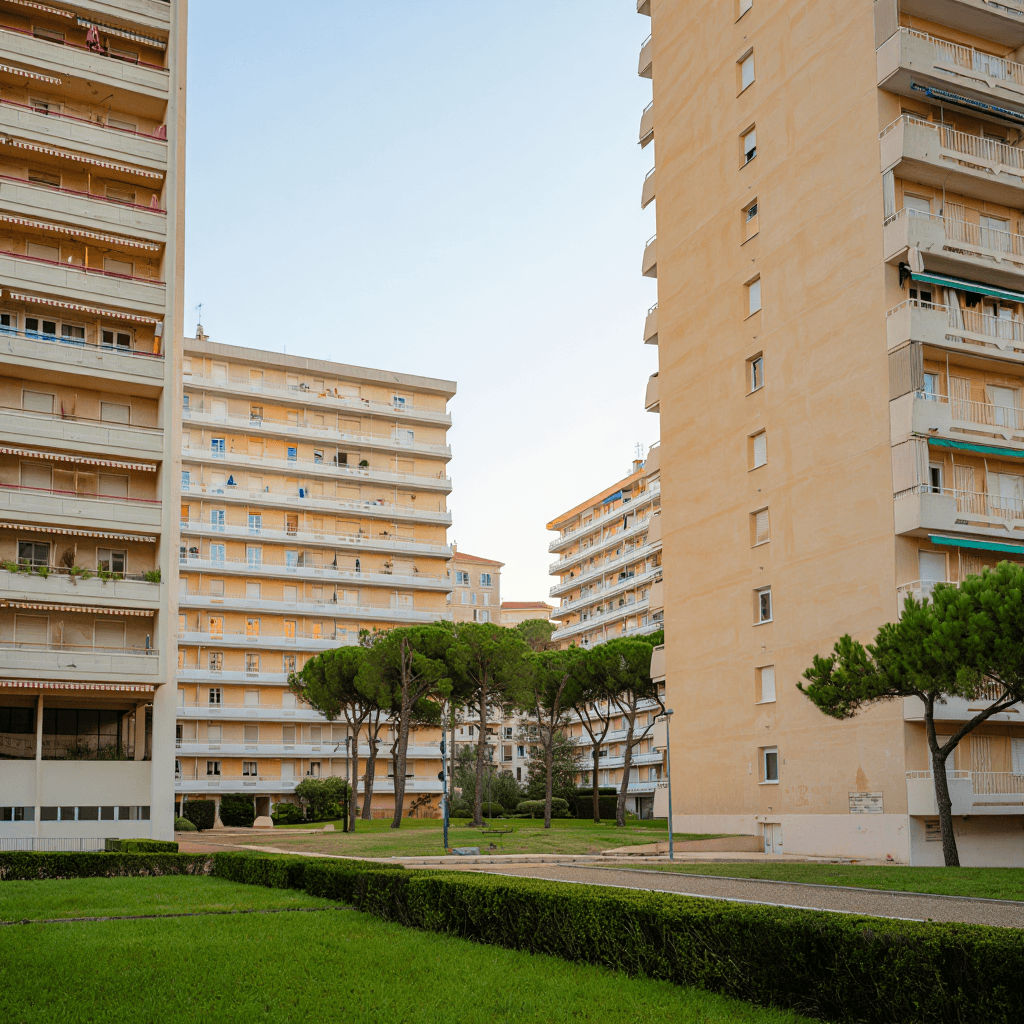
Buyers in Saint-Tronc are mainly first-time purchasers with modest budgets (€150,000 to €220,000 for a one- to two-bedroom apartment), investors seeking high rental yields, and households relocating within the Marseille metropolitan area. Strong rental demand is a key argument for investors.
Gross yields can reach 7–9% on small units, making it one of the strongest markets in Marseille in terms of pure profitability. This favorable context supports consistent transaction activity across the 10th arrondissement.
Small units (studios and one-bedroom apartments) account for most transactions, both for rental investment and first-time buyers. Two- and three-bedroom apartments attract families looking for affordable housing with good value for money. Property condition and building quality are key decision factors.
Properties with balconies or small terraces are particularly valued, even modest ones, in an area where outdoor space remains rare. Proximity to public transport (bus lines, future metro extension) also influences value.
Recently renovated or well-maintained buildings stand out clearly, with price differences of up to 15–20% compared to the neighborhood average.
The diversity of Saint-Tronc’s housing stock makes valuation difficult without local expertise. A renovated apartment in a quiet, well-connected residence can be valued well above the neighborhood average. Conversely, a ground-floor unit in a deteriorated building may struggle to find buyers even at a low price.
Building quality, EPC rating, transport proximity, and overall condition are the four decisive factors. A realistic valuation based on comparable recent sales is the only reliable approach.
Floor level plays an important role: ground floors are generally discounted unless they include private garden access. Top floors without elevators are also penalized, especially for families and elderly buyers.
Exposure and natural light are major advantages in a neighborhood where many 1960s–1970s buildings were not optimally designed. South-facing or dual-aspect apartments benefit from a significant premium.
Exact location within Saint-Tronc strongly affects value: areas closer to shops and services (Avenue de Saint-Tronc) are more highly valued than more isolated parts. Environmental quality — green spaces, cleanliness, parking — directly impacts attractiveness.
Noise pollution, particularly from traffic, can significantly reduce value. On the other hand, proximity to schools is an advantage for families, a meaningful segment of buyers despite investor dominance.
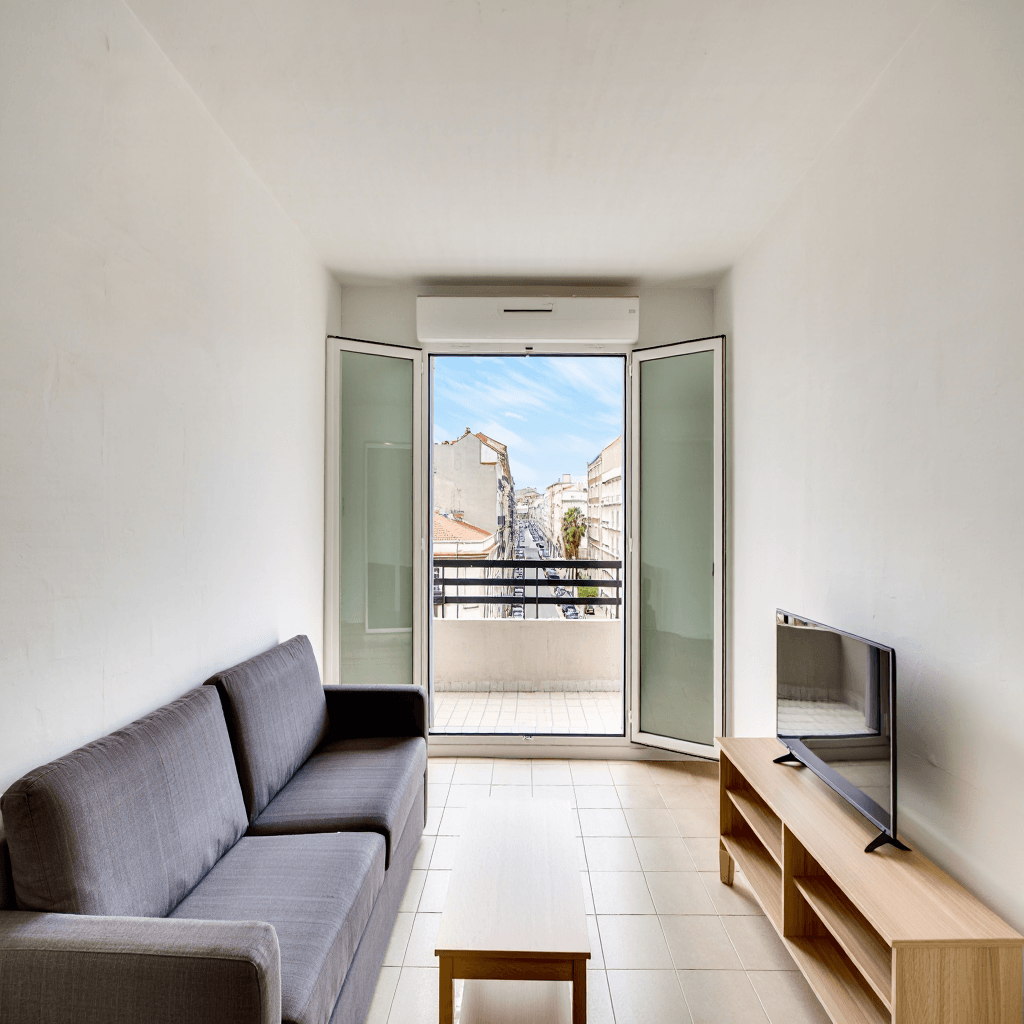
Since 2020, Saint-Tronc has seen moderate price growth (+8% to +12% depending on property type), less than central districts but more stable. This reflects a less speculative market driven more by real demand than short-term trends.
Future transport improvements and urban renewal projects could support further appreciation over time, although their long-term impact remains uncertain.
A reliable valuation requires analyzing at least 8–10 comparable transactions from the past six months. Online listings alone are not sufficient: only completed sales provide accurate pricing benchmarks.
Local professional expertise is essential to interpret Saint-Tronc’s specific market conditions and avoid costly pricing mistakes.
Online valuation tools offer only a rough estimate in a market as specific as Saint-Tronc. DVF (property transaction data) provides useful factual information when correctly interpreted.
Overpricing is the most common mistake: an inflated price leads to low viewing activity and eventual downward revisions that harm the property’s perception. Underpricing is less frequent but results in lost value for the seller.
A valuation remains valid for 2–3 months in an evolving market like Saint-Tronc. Beyond that, updates are necessary to reflect new comparable sales and market changes.
Buyers systematically negotiate in this area, typically requesting 3–8% reductions. Accounting for this from the outset helps optimize final sale outcomes while maintaining negotiation room.
Providing a well-supported valuation with comparable references increases credibility and facilitates negotiations. Transparency in methodology is highly valued in this market.
This site is protected by reCAPTCHA and the Google Privacy Policy and Terms of Service apply.
