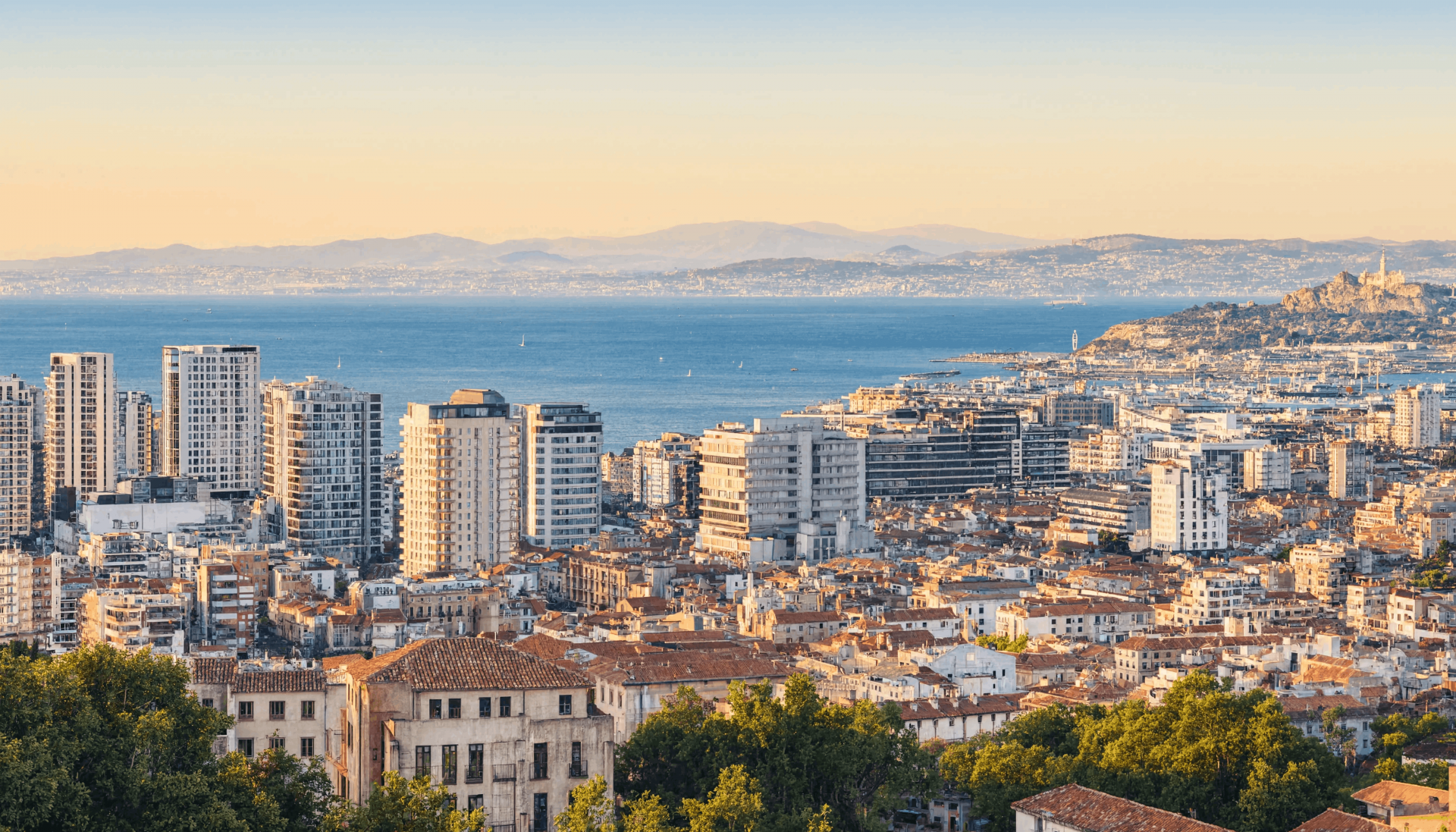
Investing in new build real estate in Marseille in 2026 takes place within a favorable context. Following the market correction of 2023-2024 and the end of the Pinel scheme at the close of 2024, the market has rebalanced. New tax incentives have emerged, and Marseille’s core fundamentals—strong rental demand, still-competitive prices, and large-scale urban development projects—remain rock solid.
With an average gross rental yield of 5.38%, the highest among France's major metropolitan areas, Marseille stands out as the most relevant buy-to-let investment destination in France for investors seeking to combine ongoing profitability with mid-term property value appreciation.
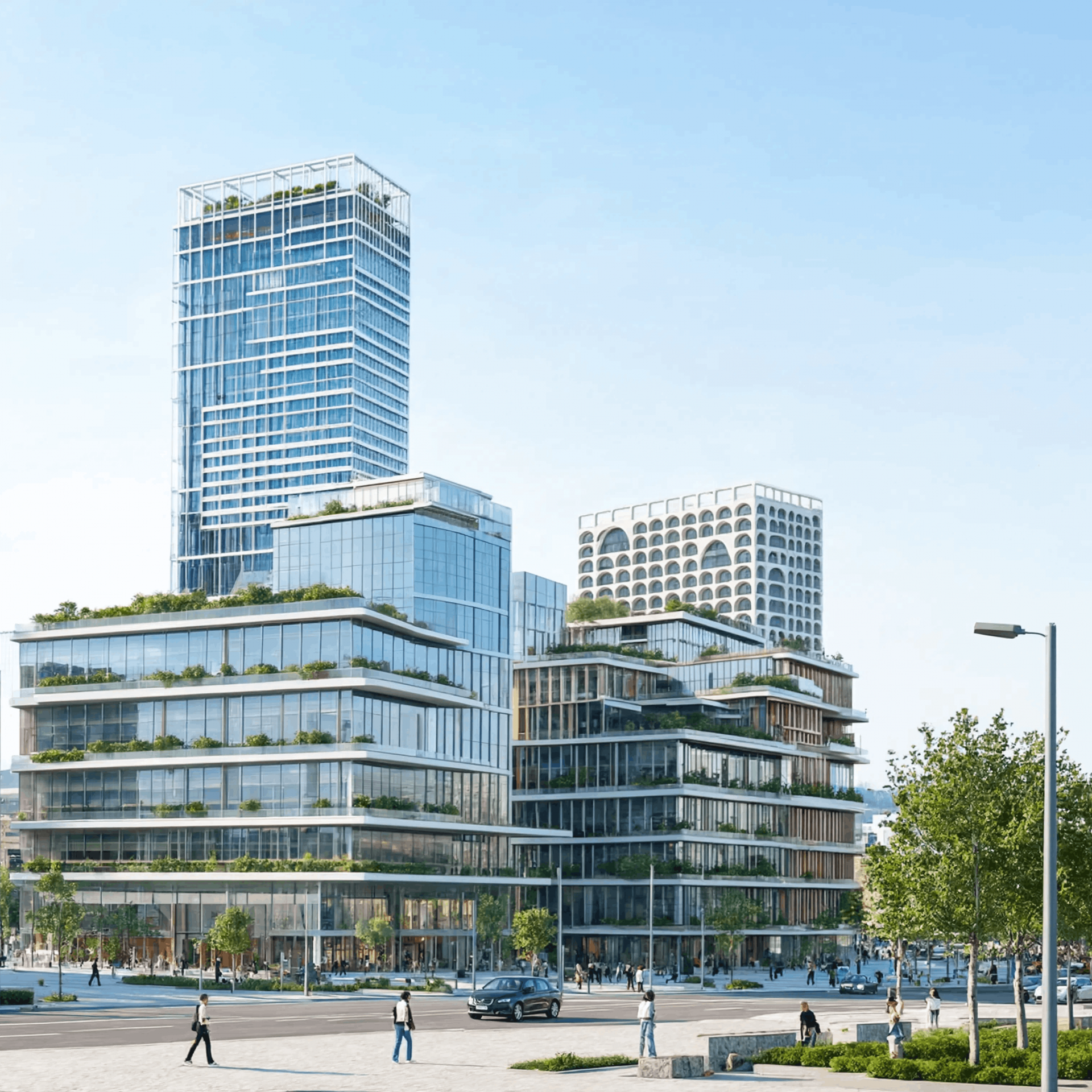
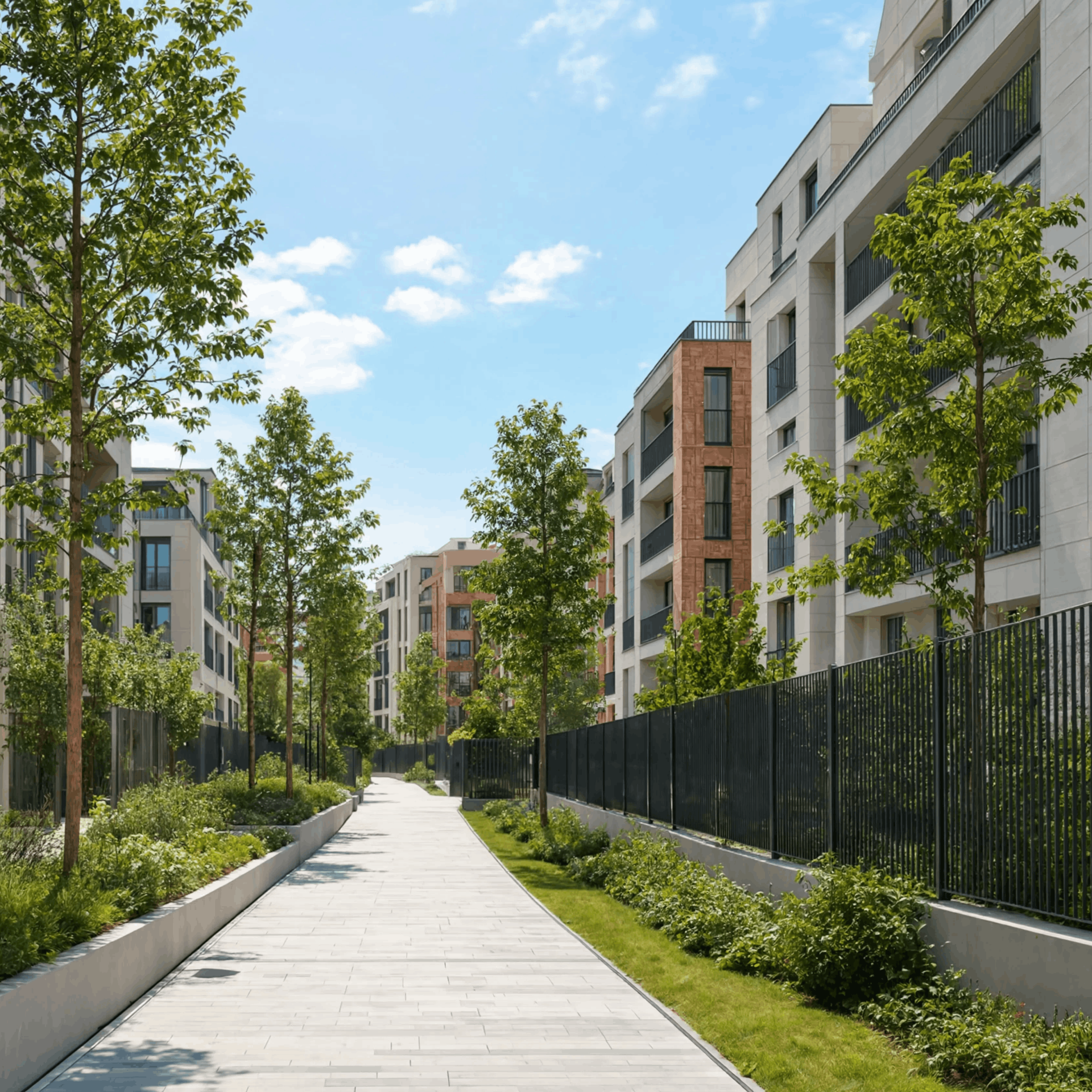
The primary reason to choose a new build for a buy-to-let investment in Marseille is regulatory. Since January 1, 2025, properties with a "G" energy rating can no longer be rented out, and "F" rated properties will face progressive restrictions leading up to 2028.
A new apartment compliant with the RE2020 environmental regulations is rated A or B on the DPE (Energy Performance Certificate): it completely escapes these constraints and can be rented out freely, without any risk of future restrictions. In a city where a significant portion of older housing stock has poor energy ratings, this regulatory compliance serves as a growing competitive advantage.
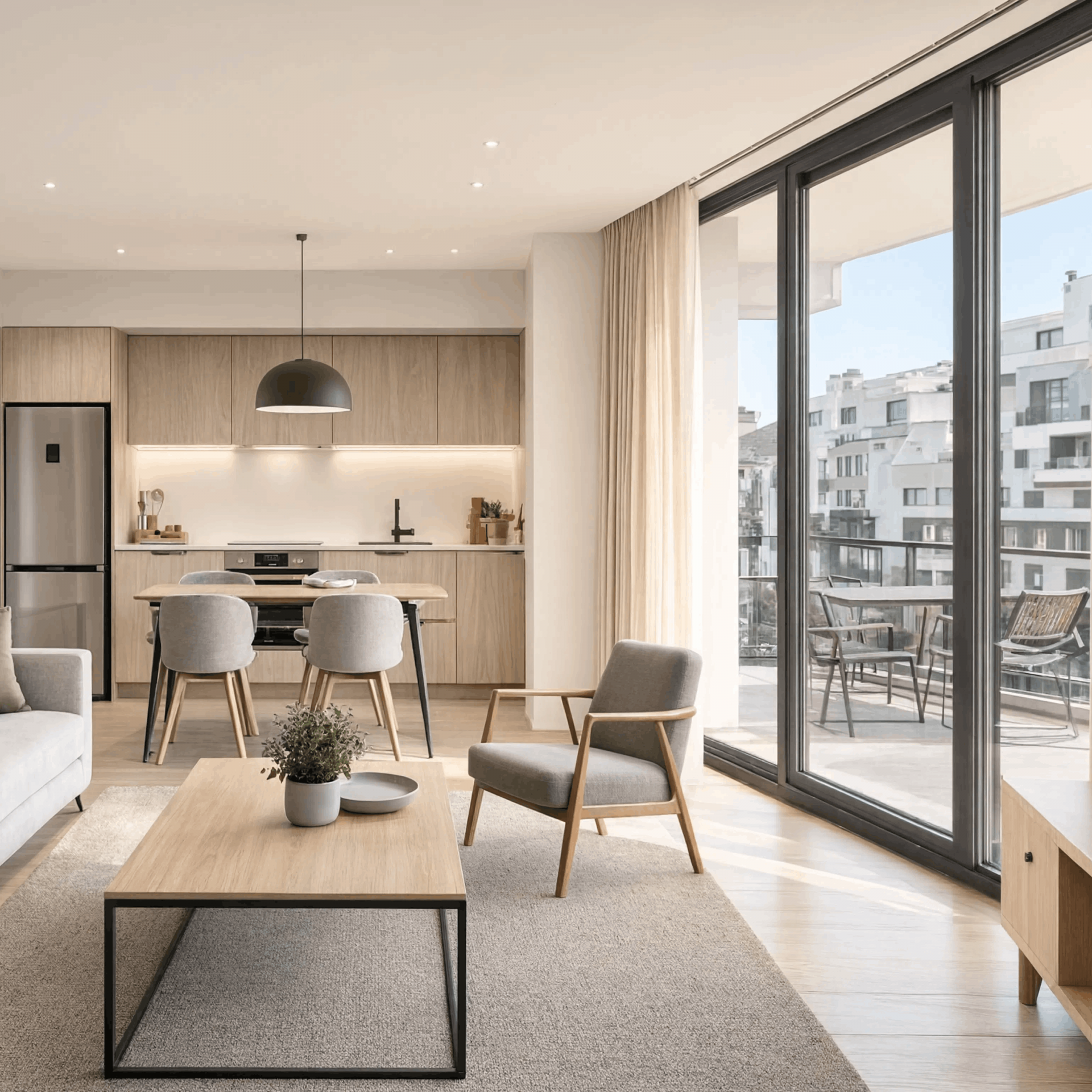
This regulatory compliance improves rental liquidity and resale value, positioning new builds as a secure investment against evolving standards.
A new property requires no renovation work during the first ten years, thanks to the five legal structural and construction guarantees covering the building. No facade refurbishment, no boiler replacements, and no electrical upgrades to anticipate.
Maintenance costs are minimal during the first decade, which directly boosts net profitability and reduces budget uncertainties. For an investor managing their property remotely, this predictability of expenses is a decisive factor.
Acquisition fees for new builds (2-3% of the purchase price) are significantly lower than those for older properties (7-8%). For a €220,000 apartment in Marseille, this difference represents an immediate savings of €10,000 to €12,000, which improves the overall return of the operation over its holding period.
These upfront savings essentially act as an additional annual return of 0.5% to 0.7% over a 15-year holding horizon.
The LMNP status (Non-Professional Furnished Landlord) is the most relevant tax framework for the vast majority of investors purchasing a new build apartment in Marseille in 2026. Its principle relies on the accounting depreciation of the property (excluding land) and the furniture, allowing investors to heavily reduce—or even completely offset—the taxable base of rental income for 15 to 20 years.
In parallel, furnished rentals generate rents that are 15% to 25% higher than unfurnished rentals for identical surface areas, backed by sustained rental demand in Marseille for small and medium furnished units. For a 1-bedroom apartment (T2) in Marseille, the gap in net yield between an unfurnished rental and an LMNP furnished rental reaches 1 to 1.5 percentage points.
Our real estate agency in Marseille assists investors in optimizing their LMNP status, maximizing tax benefits while securing rental profitability.
The Intermediate Rental Housing (LLI) scheme, which came into effect in January 2025, represents the main tax novelty for new build investors since the end of the Pinel scheme. This program offers a reduced VAT rate of 10% on the acquisition—compared to the standard 20% VAT—in exchange for a commitment to rent out the property at intermediate rent capped rates.
Eligible programs in Marseille—notably in the Euroméditerranée district and certain developments in the east—offer LLI investors a secured net profitability of 3.5% to 5%, with a reduced VAT that lowers the entry price and thus enhances the yield over time.
Introduced by the 2026 Finance Act, the Jeanbrun tax scheme (or "private landlord status") allows owners of new build properties rented out unfurnished to deduct between 3.5% and 5.5% of the property's value from their taxable income base annually.
This depreciation mechanism for unfurnished rentals was previously reserved exclusively for furnished rentals (LMNP), and its extension to unfurnished rentals constitutes a significant tax advantage for landlords who prefer this rental method. The rental commitment is a minimum of 9 years, and the generated property deficit can be offset against overall income up to €10,700.
The Euroméditerranée sector is the most heavily documented investment zone in Marseille. New build developments are marketed there between €3,000 and €3,600 per square meter—a competitive price for an area benefiting from €7 billion in public and private investments.
Gross yields reach 5% to 6% on smaller units, and the prospect of capital appreciation over a 5-10 year horizon is driven by the ongoing urban renewal program. This sector combines sustained rental yield with capital gain potential, a rare combination among France's largest metropolitan areas.
The 13th arrondissement, and particularly the Château-Gombert area surrounding the technology park, offers some of the highest gross yields in the Marseille new build market, reaching up to 7% to 8% on well-located studios and 1-bedroom (T2) apartments.
The 10th arrondissement offers the best balance between rental yield (5% to 6% gross) and the quality of both the property and the environment. New build developments are priced between €3,500 and €4,200 per square meter, with rental demand driven by professionals from La Timone University Hospital and medical school students.
The 8th arrondissement is not geared toward investors seeking maximum yield—prices ranging from €4,500 to €7,000 per square meter mechanically compress gross profitability to 4-5%. However, for investors who prioritize long-term capital appreciation and property liquidity, this is the most secure sector in Marseille.
In Marseille, where the new build market attracts developers of highly variable sizes and financial strengths, analyzing the developer is a prerequisite to any investment decision. Delays of 12 to 24 months and construction defects have been reported on certain developments. Checking previous completions, buyer reviews, and the financial stability of the company is indispensable.
Investing in Marseille requires a subtle reading of the market, a mastery of available tax incentives, and knowledge of active local developers. Our team supports investors at every stage of their project: identifying high-potential developments, simulating net profitability based on the chosen tax framework, analyzing developer financial health, and monitoring progress until handover.
This site is protected by reCAPTCHA and the Google Privacy Policy and Terms of Service apply.
